Spoiler Alert!
I don’t care at all about spoilers.
Literally not at all.
I get it: some stories hinge on the shocking twist, the unforeseeable surprise. And yes, it is nice to experience that feeling once in a while. I absolutely LOVED experiencing the surprises at the end of (e.g.) Atonement, Ender’s Game, The Sixth Sense, and The Others.
On the other hand, reading/watching these stories again provides no less pleasure. You get to see the care with which the author has constructed the narrative, the tiny details that are suddenly so significant, the hints and ironies that were there all along that you totally missed the first time. The experience is just as thrilling, even if it isn’t as shocking.
I think about this a lot in relation to ancient literature. So much of ancient literature is based on myths that the audience was already deeply familiar with. New adaptations might emphasize different things or change small details, but the outcome of the story was the same (well, usually). When a Greek audience read the Argonautica, they already knew how the relationship between Jason and Medea was going to end (::ahem:: VERY badly). The author, Apollonius, knew that they knew…
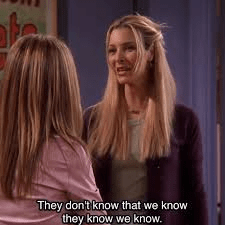
…and so he sprinkled all sorts of delicious dramatic irony throughout the beginning of their relationship (e.g. Medea’s burgeoning anger, Jason’s self-comparison to another Greek hero who ended up abandoning his wife). Or how about the most famous Greek tragedy, Oedipus Rex? Most of the audience already knew Oedipus’ story. They knew he had killed his father and married his mother. So if we were an ancient Greek audience, the drama of the play wouldn’t come from us finding out those things about him…it’d come from him finding out those things about himself. Not realizing he was the one who killed the old king Laius, and not realizing that that old king was his father, he swears to avenge King Laius “as if he were my own father.” Or how about when Oedipus’ mother/wife Jocasta assures her (unbeknownst-to-her) son that oracles aren’t to be trusted, because many years ago she heard an oracle that she was going to marry her own son and obviously that didn’t happen? ::chef’s kiss:: The audience watches this whole thing unfold like a horror movie. We’re mentally screaming at him IT’S YOU, OEDIPUS and STOP ASKING QUESTIONS YOU DON’T WANT ANSWERS TO! the same way we might groan when we watch the final girl in a slasher movie run up the stairs or open the door we know the killer’s hiding behind.
That discrepancy between what the audience knows and what the characters know – that dramatic irony – is an extremely effective way to build up tension and suspense. In my opinion, it’s just as effective as the tension created when we are kept in the dark until some final, shocking moment.
Knowing what happens at the end can help you appreciate the details, too. I recently rewatched The Sixth Sense with my kids, who were seeing it for the first time. They got a kick out of it because of the twist, of course. But I got a kick out of it because I was suddenly appreciating things that I hadn’t previously paid much attention to (e.g. the strange way Malcolm’s wife “ignores” him).
I mean, how many times do we re-read books and re-watch movies, even though we know what happens? There’s so much more to enjoy in a story than any individual plot point that relies on surprise.
So…that is why I don’t care about spoilers.
I’m also getting increasingly frustrated with how the obsession with spoilers has changed not only our media but also our discourse about it. Heck, we even call them spoilers, like the story isn’t fit for consumption any more once you hear them.
People want to be SURPRISED, they want to be SHOCKED, they want that TWIST they didn’t see coming. In response, authors sometimes (in my opinion) go too far. I’ve read some REALLY stupid twists, folks, twists that are shocking and unpredictable because, well, they don’t make much sense. And that kind of feels like a betrayal, because it means the author thought we wouldn’t notice (or wouldn’t care about) little things like, oh, plot holes.
More importantly, the obsession with going in blind means it’s really difficult to for us to talk to each other about our media. Of course there are ways to discuss a book or a film without giving spoilers, and it’s polite to be mindful of that when you’re talking to someone else. However, if you can’t even discuss something that’s been out FOR YEARS without someone getting upset because you “spoiled” one of the plot points and THAT RUINED THE WHOLE THING FOR THEM? That’s actually bonkers. Because, like I said above, it doesn’t actually ruin anything.
For all of these reasons, I decided to do something a little unusual in my novel Her Undying Thirst: I “spoil” the book in the prologue. The two biggest plot points? You know them going in (I’d tell you what they are right here in this blog post, but I want you to buy the book). Because it’s not really about what happens. It’s about how it happens. You know the old saying: it’s about the journey, not the destination.
What do you think, friends? Do you hate spoilers? Or do you feel the same way I do?
In Proximum, Regina Vestra

 Reina Callier (Artes Reginae Press)
Leave a comment