There’s not much to do on the drive between Denver and Wichita, but I don’t mind. It always gives Kris and me time to discuss the kind of random shit that the exigencies of our everyday lives normally prevent us from discussing. On our most recent trip, we chatted about how ancient Greek (and Roman!) fiction is basically just like the Marvel Cinematic Universe.
This discussion did not center around the fact that so many of the characters from both the GMU (Greek Mythological Universe) and the MCU have supernatural powers or divine identities, although that is certainly one obvious similarity (heck, the Greek god Zeus even showed up in the Marvel film Thor: Love and Thunder). Nor did it center around the typical narrative arcs found in both, such as battles, journeys, and the integration of individual and community.
Rather, it centered around the ways in which both the GMU and the MCU rework the “source material” (which isn’t a monolith anyway), leading to crossovers, prequels, sequels, alternate versions, full-on remakes, and lots and lots of so-called “easter eggs” (which are basically just cheeky allusions).
I mean, really, how many versions of Spider-Man’s origin story do we need? The answer is ALL OF THEM, just as the ancient Greeks apparently needed several versions of a tragedy in which Orestes teams up with his sister Electra to kill their mother Clytemnestra: Aeschylus’ Libation Bearers, Sophocles’ Electra, and Euripides’ Electra. All three of these plays focus on the singular event of Clytemnestra’s death (and, as you can see, two of them even have the same title!). Yet each author has his own style and chooses to incorporate slight variations in plot and character. And that’s just ONE piece of a story that was already well known since at least the time of Homer (mid-8th century BCE), who mentions Orestes’ matricide at several points in the Odyssey. There are various sequels (e.g. Aeschylus’ Eumenides and Euripides’ Iphigenia at Tauris) and prequels (e.g. Euripides’ Iphigenia at Aulis and the Roman author Seneca’s Thyestes) of this story, too!
Speaking of Spider-Man: you know how both Tom Holland’s Spider-Man and Chadwick Boseman’s Black Panther first showed up in the ensemble cast of Captain America: Civil War before they each got their own films? Well, that kind of reminds me of how both Achilles and Odysseus show up in the ensemble cast of the Iliad during the Trojan War, after which both get their own epics that focus on them individually: Homer’s Odyssey and Statius’ (sadly unfinished) Achilleid. Keep in mind that none of these stories is the product of a single author: although the extant literary texts like Homer and Statius give us examples of what people were doing with these stories, we know that there were many other versions being told, sung, and written down by countless storytellers, just as the films in the MCU are based on a huge range of source material that both predates and succeeds the cinematic versions.
How about Easter eggs? For those of you who don’t know, an Easter egg is a cryptic message, hidden reference, or inside joke that fans who are most familiar with the corpus might catch (while casual observers might miss it). The MCU contains so many Easter eggs: in Spider Man: Homecoming, for example, there’s a poster of Bruce Banner (the Incredible Hulk) in Peter Parker’s classroom, even though that particular character does not play a role in the movie. In a particularly hilarious Easter egg, Howard the Duck (from the cult-classic 1986 Marvel film) appears briefly in Avengers: Endgame. To audience members who are unfamiliar with the “lore” (like my children), the blink-and-you’ll-miss-it image of Howard is just some weird duck. To audience members who are knowledgeable of the tradition at large, it’s a clever nod to the way all these stories are interconnected.
There are many examples of such Easter eggs in the GMU, but one of my favorites comes from Book 11 of the Iliad. Before I explain the Easter egg itself, some context: though the Iliad is about the Trojan War, it’s not about the whole Trojan War. In fact, many of the famous episodes from the Trojan cycle are nowhere to be found in the Iliad, such as the beauty contest of the goddesses that led to Paris’ theft of Helen (the cause of the war) and the Trojan horse (perhaps THE most famous image of this famous mythological war). Another episode that does not appear in the twenty-four books of the Iliad is the death of Achilles, who famously – according to the mythological tradition – was killed when the Trojan prince Paris (with the help of the god Apollo) shot him in the one spot where he was vulnerable: his heel (hence the name of our Achilles tendon). Though this episode is not in the Iliad, whose narrative does not extend to Achilles’ death, Homer slyly alludes to it in Book 11, when the Trojan prince Paris shoots an arrow not at Achilles, but at another Greek warrior named Diomedes. Diomedes swats the arrow away from his heel and laughs at how foolish Paris is for thinking he can fell such a great warrior by shooting an arrow at his foot. An audience familiar with the epic tradition will surely laugh, knowing that this is exactly how Paris eventually kills Achilles – a greater warrior than Diomedes – in non-Homeric version of the story of Troy.
Closely related to the Easter egg, but somewhat less dependent on “hawk-eyed” scrutiny (see what I did there?) is the cameo, a brief appearance by a well-known character or actor that usually has little to no effect on the plot. The best example of this, of course, is Stan Lee, one of the original authors of the Marvel universe when it existed purely in comic-book form, whose cheerful cameos in the films bring delight to the audience. Likewise, in Book 1 of Apollonius’ Argonautica, which depicts the Argonauts’ quest to retrieve the Golden Fleece, a little baby Achilles (held by the centaur Chiron) appears on the shore, waving at his father Peleus as the Argo departs. Though it has no bearing on the plot, it is a pleasing moment for the audience, who are most likely fans of the Achilles from Homer’s Iliad if they are reading the Argonautica, which was written 500 years later.
And this brings me to the Argonautica. ::deep preparatory breath:: THIS is the work that most of my conversation with Kris revolved around, because Apollonius implements so much fan service and so many clever references in his epic that he might as well be Kevin Feige himself. Though the Argonautica is one of our later epics, it is a prequel of several earlier works. It is also the ultimate crossover. Characters from several heroic traditions appear and play significant roles, such as Herakles (Hercules), Orpheus, the Sirens, Circe, and MANY more.
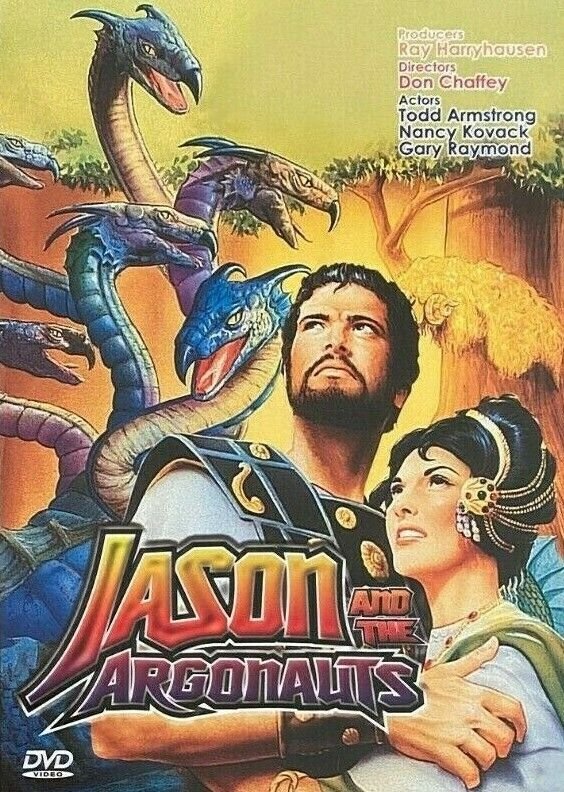
But perhaps the most important work that the Argonautica draws on is not an epic, but a tragedy: Euripides’ Medea. Euripides’ Medea is infamous for the shocking behavior of the titular character, who kills her own children to punish her husband Jason (the father of those children) after he abandons her for another woman. The violent murder of her own children is awful, of course (moreso because, in other versions of the story, Medea had not had an active role in the death of her own children), but it’s informed by who she is: a foreign and powerful witch who has betrayed her own family to help Jason get the fleece because she’s in love with him. In Euripides’ play, Medea criticizes Jason by detailing all the ways in which she helped him complete his heroic quest for the fleece, burning all her bridges in the process and leaving herself with nowhere to go when he abandons her. In the Argonautica, written two-hundred years after this famous play, we see these very events: Jason coming to Medea’s homeland in search of the fleece, Medea falling desperately in love with him, Medea using her powers to help Jason get the fleece and defeat many other obstacles on the way back to Greece. We also see the seeds of what we know will be the devastating outcome of Jason and Medea’s story: Medea’s anger when she thinks Jason’s trifling with her, her willingness to kill her own brother to help Jason. In the ultimate irony, at Jason and Medea’s first meeting, Jason not only calls Medea “gentle and kind” but also compares her to Ariadne, a princess (like Medea) who (like Medea) betrays her family to help a hero, and who (like Medea) is eventually abandoned by that hero. Of course, Jason leaves that last part out. But the audience who is familiar with Euripides’ Medea knows how things are going to go down between Jason and Medea, and they will surely see the irony in the omitted reference to a hero abandoning the powerful woman who helps him. This absolutely delectable dramatic irony assumes that the audience is familiar with other, earlier versions of the story. In other words, the prequel’s clever references cannot be fully appreciated without knowledge of the larger tradition as a whole. It’s working as a member of a larger corpus with a multitude of authors.
The last entry in the GMU that I want to talk about is Ovid’s version of the Calydonian Boar Hunt from Book 8 of the Metamorphoses. This boar hunt was a well-established entry in the mythological tradition. There are references to it in many works, both literary and artistic. By the time it gets to the Roman poet Ovid, who was working in the 1st century BCE-1st century CE, it’s well known as one of the ultimate crossover events: heroes like Theseus and Pirithous (from Athens), Jason (from the Argonautica), Laertes (Odysseus’ father), and Nestor (from the Iliad) are among the many heroes understood to have been involved in the hunt for the immense, god-sent boar. But Ovid’s version of the hunt departs from what seems to be the norm: instead of a straightforward collaborative heroic quest, Ovid’s Calydonian boar hunt becomes a way for him to absolutely skewer the usual toxic masculinity of Greek heroes. The men in the hunt appear bumbling, trying – and failing – to spear the boar, pole vaulting into trees to get away from its tusks, literally stumbling in the melee…The one woman there, Atalanta, finally draws first blood, and the hero Ancaeus is SO PISSED that a woman has done the thing that he says “let’s see what a MAN can do,” rushes at the boar, and is promptly gored IN THE DICK. It’s a hilarious (if gory) send-up of heroic machismo (nor is it the only instance of this in the Metamorphoses or any of Ovid’s other works).
So what does this have to do with the MCU? It reminds me of how varied the films can be in tone. Some characters – like Ant Man and Deadpool – are naturally more comedic and metatheatrical, but sometimes even films about the same character can vary in tone because they have different directors. Taika Waititi’s Thor films, for example, diverge drastically from the Thor films directed by Kenneth Branagh and Alan Taylor.
I could go ON AND ON about all this. Actually, I already have. I could go ON AND ON INDEFINITELY about all this. So what’s the point? The point is that, whenever I see people complaining about a reboot or a sequel or a prequel or an adaptation that changes the source material or films/shows doing too much “fan service”…I always think, but this is how story-telling has always been done. This is what it means to share stories. We change them, expand on them, develop our own vision of them and communicate that vision to people who have different ideas about the fictional worlds we all inhabit…
In other words, don’t be mad about my “Carmilla” retelling and my irreverent take on the Sirens kthxbye.
In proximum, Regina Vestra

 Reina Callier (Artes Reginae Press)
Leave a comment